Data
| Data | |
|---|---|
 Data | |
| Team Members | Kansas City MO City of Bellevue WA 100 Resilient Cities/Rockefeller Foundation Aspenworks KC Digital Drive ThinkBig Partners Center for Innovative Technology City Innovate Foundation Skayl Cisco XAQT University of California-Davis |
| Blueprint | Data |
This set of 65 projects is managed by the data team and aims to address friction stakeholders experience in the deployment of or operations of IoT CyberPhysical systems. These include business case, privacy guidance, licensing frameworks, and citizen outreach. Additionally, the Data Supercluster is driven by an overarching intent to encourage grassroots, corporate and scholarly proofs of business value and economic sustainability in Smart and Secure Communities and Cities. The Data Supercluster continues to engage with industry leaders, Universities and Colleges, community leaders and solution providers to synthesize a value proposition and means to prove its economic and stakeholder value.
We're soliciting stakeholder engagement by sharing our research and relevant articles tagged by our team to help those with an Action Cluster proof in progress. Those who care to share their experiences in a Podcast format can contact Alex at aspen dot ai to participate in the Podcast series.
The DSC recognizes that regulation can impede and create friction in business and solutions. The DSC reflects the concept that a compass and map is more powerful to innovation and deployment more that step-by-step narrowly defined and approved approaches. We continue to see an acceleration in the technology used for visual processing, vibration analysis and determine the signal that is often hidden in the noise of end point data collectors.
A major trend that is shaping Data value, is the nature of interconnected Data sources, transfer points, and Cloud computing. The computing now taking place at the Edge of the network is crucial to security and privacy. By distributing the processing costs to powerful edge devices, costs decline and performance of the network is more predictable.
High value Data is available via over 2600 sites globally. The DSC vets and distributes lists of directories available for innovators to use in their Action Cluster planning and proof projects. The Data SuperCluster recognizes that Machine Learning and AI applications require high-value datasets, often provided by Cities / Communities as well as Citizens. Flexible open licensing encourage sharing and can help establish a life-cycle of value where derivative works carry a licensing framework that assures access rights to others building on the original data, inference engines, machine templates, and AI applications.
The DSC recognizes that community leaders by virtual of identifying the metrology around Smart Cities drive the evolution that supports that metrology.
By agreeing on what we measure, all cities can then apply the data in a manner that allows each of us to address our unique challenges regardless of the size, governance or location of our municipality. DSC encourages open data exchanges, that build paths between various value add functions in the emerging IoT and Internet interfaces.
In 2018, the SuperCluster merged with Data governance and exchange SuperCluster to create Data SuperCluster. Data governance and exchange is one of the primary challenges to the deployment of smart cities technologies today. The data governance challenge has two main components. Many cities have successfully implemented data management and open data solutions for public data.
There is not yet developed a comprehensive strategy for handling all of the data from thousands of IoT sensors available now and envisioned for the future. Cities are interested in IoT technology as a way to improve operations and the delivery of services. What is a standard, but flexible and customizable framework that will allow cities to use and exchange IoT data for public value while protecting public privacy and trust? GCTC’s Data governance and exchange SuperCluster aims to address the challenge of building a governance and exchange model for IoT data and a plan for governments to successfully customize and deploy it. The group will work to collect best practices and produce blueprints for data exchange and governance, as well as deployed proofs to share with other teams and stakeholders.
Chair(s)
-
Scott Tousley
Chief Development Officer at Inca Digital
Washington, DC United States 
Jason Whittet
Digital Innovation Lead at Amazon
Scottsdale AZ United States
Activities
|
Applying Open Data to inform future Smart City Design | |
In order for cities and design professionals to have a more transparent understanding of the Climate Change impacts of potential building development, they must have a tool that provides quick and facile real time calculation linked to the weather data and utility information of an area, along with the potential energy usage. Between March 2016 and 2017:
| ||
|
BigClouT | |
BigClouT project aims at giving an analytic capability to cities exploiting available big data from sources such as IoT devices, open data, social networks, mobile applications, etc. and use them to improve the daily life of cities, their citizens and visitors. The target applications are:
| ||

|
Building an Open Data Ecosystem | |
| The "Building an Open Data Ecosystem" project in Leeds, United Kingdom aims to foster collaboration and innovation through the development of an open data ecosystem in the city. | ||
|
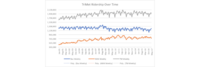
CITYDASH City-wide analytics dashboard from public and private data sources | |
Data analytics and insights powered by machine intelligence for 4 target city departments:
| ||
|
CIVIC Data Platform | |
| CIVIC is an open data platform to democratize
public information and drive meaningful engagement through neutral, nonpartisan analytics. It's built entirely by multidisciplinary teams of volunteer coders, designers and domain experts using open source technology. | ||

|
Central Data Management System | |
| The 'Central Data Management System' project in Vienna, Austria aims to establish a comprehensive and efficient data management framework for the city. Led by the City of Vienna's Department of Data Management, the project seeks to centralize data storage, ensure data quality and security, and streamline data access and sharing processes. | ||

|
CheckD Data Wallet: Eat2Give | |
| The EAT2GIVE project in Subang Jaya, Malaysia, leverages the CheckD Data Wallet to unite food lovers, local businesses, and charities in a unique fundraising initiative. By claiming the EAT2GIVE campaign badge on their CheckD wallets, food enthusiasts can support local causes every time they purchase designated menu items at participating food merchants, who pledge RM3 per validation to charity. This innovative campaign promotes community engagement and philanthropy while maintaining user privacy, enabling merchants to boost foot traffic cost-effectively, and providing organizers with seamless validation and transparent reporting. Driven by a partnership between Dataswyft, SubangFood, and TheBFG.team, EAT2GIVE fosters a culture of doing good through commerce, connecting residents and businesses in a shared purpose to strengthen the Subang Jaya community.
'"`UNIQ--item-1093--QINU`"' | ||
|
Citizen App | |
| Citizen App, the first of its kind, empower individuals to claim and legally own their data from across multiple sources, then use it securely and seamlessly in everyday life. | ||
|
City Insight Platform- Communities in Context | |
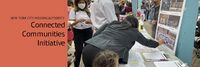
| Using data from the city, state and federal level Vizalytics will create a City Insight Platform.
This will provide users with a real-time view of what is happening in a neighborhood, and can be refined by choosing which lens to view- from socio-economic indices, business climate, transportation, infrastructure, quality of life and more. | ||

|
Combating Urban Blight in the New York Capital Region and Mohawk Valley | |
| Urban blight is a city and regional level problem that impacts social and economic opportunities, among others, of those who live and work in cities. This project is focused on piloting a shared policy, management, and technology infrastructure that will allow four cities within the NYS capital region to share information about properties in a way that enables new insights into and action focused on urban blight. With funding from the NYS Department of State, the Cities of Schenectady, Troy, Amsterdam, and Gloversville have partnered with the Center for Technology in Government (CTG), University at Albany, to develop the technical, policy, and organizational capabilities needed within and across the cities to interrupt the cycle of blight in their communities. The results of the pilot will be made available for application regionally and statewide. Future work will include integrating additional data types (e.g. video) and sources (e.g. sensor technologies). | ||
|
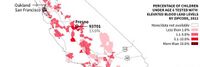
Constituent-led Public Data and IoT Utility for Urban Health Housing and Environmental Hazard Management | |
Objectives
| ||
|
Coral Gables Smart City Hub Public Platform | |
| The City of Coral Gables promotes the development of a smart city ecosystem that fosters innovation by bringing together through technology People, Businesses, Organizations, Things, and Systems. By leveraging strategic planning and innovation, the City’s digital transformation and smart initiatives can benefit our citizens with continual improvement to customer service and quality of life. Our smart city plan implements several interconnected and interoperable elements that include a Smart City Hub, Data Platforms, Internet of Things, and a robust and resilient technology infrastructure with high-speed communications. | ||
|
Data.gov | |
| Data.gov is a website operated by the U.S. federal government that provides access to datasets and other resources related to government activities and policies. It is intended to make government data more easily accessible to the public, with the goal of increasing transparency and enabling citizens to better understand and engage with their government. Data.gov offers a wide variety of data sets and resources, including data on topics such as agriculture, education, energy, finance, health, and more. The website also includes tools and resources for developers, such as APIs and code libraries, to help people use the data in creative and innovative ways. | ||

|
Decision Theatre PSU | |
| Portland State University’s Decision Theater is designed for university researchers and regional stakeholders (i.e. government, private companies) to work on projects that “link data sets, visualization and decisions,” according to a university statement. The space is modeled after Arizona State University's Decision Theater, as well as a similar facility at the University of Chicago. | ||

|
DigiTel Resident Card | |
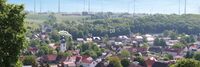
| The City of Tel Aviv has undergone a transformation to become a “smart city” that uses technology to improve the City Hall administration and its citizens’ lives. Through programs such as the DigiTel Residents Club and the DigiTel mobile application, Tel Aviv offers innovative electronic services to its population and is searching ways to make citizens interested in how the city works. Throughout the process, Tel Aviv has worked closely with Microsoft to find the best ways to achieve its vision of a smart city. | ||
|
Digital Strategy Borchen-Etteln | |
| To further increase the quality of life for all people in Borchen-Etteln and to develop the economic, social and ecological potential. In doing so, we take into account the interests of all age groups | ||
|
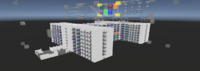
Digital Twin: Infectious Disease Management | |
| Link time, spatial and sensor data with existing enterprise data to enable new insights. | ||

|
Digital Twin: Manufacturing Quality Control Via Remote Operator | |
| The post-Covid world necessitates remote verification of manufacturing components – in real-time, as they are conveyed across the manufacturing line. | ||

|
Dwellingly | |
| Dwelling.ly is an app to improve communication between the landlord providing transitional housing and the social workers who support them. | ||
|
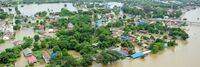
Emergency Communication Services | |
| Establishes a practical approach for management of emergency and incident response with a common operating picture. | ||

|
Estimation of De Facto Population | |
Key Deliverables
| ||

|
Family CARE - Caregiver 2.0 | |
| Presence Caregiver learns daily activity patterns and can warn caregivers, family members and friends about incidents of concern with text alerts of potential hazards including falls, water leaks and wandering. | ||
|
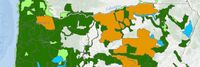
GIS Resources from the Oregon Department of Forestry | |
| Oregon Department of Forestry's GIS Data is maintained by the Information Technology Department's GIS Unit. | ||
|
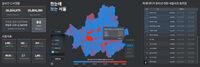
GO-PS Gyeonggi Open Platform for SmartCity | |
| GO⋅PS is a smart city standard platform to utilize the element technology of the age of 4th Industrial Revolution as a means to solve urban problems.
The Gyeonggi Province of Korea, along with Gyeonggi Research Institute (GRI) and Gyeonggido Business and Science Accelerator (GBSA), is currently creating and operating an industry-academia-related consultative body to create a sustainable business model. GO⋅PS matches companies, research institutes, and academics according to the demand of public urban matters, and uses its technologies, research works, and consulting methods to create solutions for problems and have them collected on the platform. The GO・PS is currently comprised of three large departments namely, Smart Transport, Smart Energy, and Smart Healthcare. (It is planned to be expanded with more departments in the future) | ||

|
GTFS | |
| The General Transit Feed Specification (GTFS) is a widely used data format that allows public transit agencies to share their schedule, route, and fare information in a standardized way. It was originally developed by Google and TriMet (Portland, Oregon’s transit agency) in 2005 to enable transit information to be easily integrated into Google Maps. Since then, GTFS has become a global standard for public transit data, enabling real-time transit applications and analytics. | ||
|
Global Digital Single Market for Smart Cities FIWARE | |
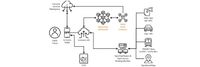
| The project will demonstrate the potential impact of creating a digital single market for smart cities based on the adoption of a minimum common set of de-facto platform standards enabling solutions to interoperate within, and be replicable across, multiple cities. | ||
|
Go-Green | |
| GoGreen aims to help people understand the impact of small sustainable gestures on their communities through technology. It presents itself as a community rewards system where participating points providers can define actions that support their communities objectives and reward people for taking them. For the users they see a marketplace of options along with rewards based on secure blockchain based smart contracts for supportive behavior. | ||

|
Home Automation | |
| Step by step process of automating a home using various technologies. | ||
|
Hub of All Things | |
| The Hub of All Things (HAT) Microserver is a pioneering digital infrastructure that enables individuals, businesses, and organizations to take control of their personal data through self-sovereign data management. Built on over $50 million of UK research, the HAT Microserver separates data storage from application services, granting users full legal ownership of their data, even if it was generated by external entities like banks or hospitals. This technology transforms personal data into a new asset class known as "self-sovereign data," which retains intellectual property (IP) rights for the data producers, allowing them to safely and securely create value from it. Hosted by Dataswyft, the HAT Microserver is cloud-native, portable, and open-source, with pending patents for its deployment and protocols for data governance, offering a more secure, efficient, and governed approach to managing personal and organizational data in a decentralized environment. | ||
|
I3 Consortium Action Cluster | |
| The I3 project is creating a tool that will allow independent device owners to directly manage how the data streams from their IOT devices are delivered to applications. Opensource Project software includes support for privacy, trust, and incentive management.
Requirements and proof-of-concepts complete. Consortium management structure in process. Demonstration systems in process. R1.0 beta software in design. | ||

|
Illuminating Smart Cities: Kansas City Runs on IoT Platform | |
| Kansas City, MO (KCMO) and its partners have designed and implemented an IoT platform to develop a smart city network, starting with Kansas City’s streetcar starter line in their Downtown area. Based on this initial site, the team has will implement a model that would make Kansas City the largest smart city network in North America. | ||

|
India Stack | |
| India Stack is the moniker for a set of open APIs and digital public goods that aim to unlock the economic primitives of identity, data, and payments at population scale. | ||

|
Lutece | |
| Lutece is an open source platform developed by the City of Paris to help you develop digital solutions. Honed for cities’ use through almost 20 years of development, Lutece has evolved into multifaceted platform with more than 400 plugins and modular architecture that will enable your specific needs and enhance your users' digital experience. | ||

|
Maryland Digital ID Integration Project | |
| The Maryland Department of Transportation Motor Vehicle Administration (MDOT MVA) has announced the availability of Maryland Mobile ID in Samsung Wallet, making Maryland the second state in the U.S. to offer digital licenses on this platform. This initiative allows Marylanders to securely verify their identity at select TSA PreCheck airport checkpoints, including Baltimore/Washington International Thurgood Marshall Airport and Ronald Reagan Washington National Airport. With this launch, Maryland becomes the first state to provide digital ID integration across Samsung Wallet, Apple Wallet, and Google Wallet. More than 200,000 Maryland residents have already adopted digital IDs since their introduction in 2022. Maryland Mobile ID serves as a secure and convenient companion to physical IDs, emphasizing privacy and safety with robust hardware and software security measures. For details on setup and usage, visit the MVA website. | ||
|
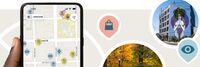
Near Me Now Portland App | |
| The Near Me Now app is a map-based guide to Portland events, food carts, restaurants, bars, attractions, stores and hidden spots | ||
|
Neighborhood Data for Social Change | |
| The Neighborhood Data for Social Change (NDSC) platform is a free, publicly available online resource for civic actors to learn about their communities. | ||
|
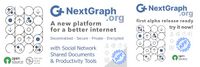
NextGraph | |
| NextGraph is an innovative approach to building a truly decentralized internet, addressing critical issues like privacy, digital sovereignty, interoperability, and security. By merging peer-to-peer (P2P) networks, Semantic Web technologies (RDF, linked data), and Conflict-Free Replicated Data Types (CRDTs), NextGraph overcomes the limitations of centralization and federated systems. Unlike traditional web infrastructures dominated by centralized corporations or federated models with inherent data ownership challenges, NextGraph emphasizes local-first software and end-to-end encryption, ensuring data portability, user control, and privacy.
The platform envisions a decentralized, efficient ecosystem where users and developers benefit from resilience, freedom, and seamless functionality without relying on central servers or monolithic databases. Its alpha release demonstrates the potential of this paradigm, and ongoing efforts focus on empowering developers with tools to build robust applications in this next-generation internet framework. NextGraph represents a significant step toward fulfilling the promise of the Semantic Web as a decentralized, privacy-first network. | ||
|
Open 988 | |
| 988 has been designated as the new three-digit dialing code that will route callers to the National Suicide Prevention Lifeline. While some areas may be currently able to connect to the Lifeline by dialing 988, this dialing code will be available to everyone across the United States starting on July 16, 2022. | ||
|
Open Data STREAMS | |
| This project involves an evaluation framework for open datasets published by the City of Portland. The goal is to create a data analysis tool which provides quality assurance for datasets made available between bureaus and to the public. | ||
|
Open Network for Education and Skilling Transactions | |
| The Open Network for Education and Skilling Transformations (ONEST) is a decentralized network aiming to democratize education by providing accessible and equitable access to a wide range of learning materials and skill development opportunities, connecting learners, education providers, employers, and facilitators across a single platform, effectively bridging the skill gap and enhancing employability | ||

|
Open Participatory Budgeting | |
| Participatory budgeting (PB) is process in which citizens decide how to allocate part of a municipal or public budget through a process of democratic deliberation and decision-making. Participatory budgeting allows citizens or residents of a locality to identify, discuss, and prioritize public spending projects, and gives them the power to make real decisions about how money is spent. | ||
|
Open platform for scalable and multi-domain IoT applications for smart cities | |
Objectives
| ||
|
OpenGrid | |
| OpenGrid is an interactive, map-based platform for exploring open data sets in an easy-to-use, map-based interface. OpenGrid enables municipalities to offer residents, businesses, and communities a better way to interact with public data. Users can perform advanced queries to filter data as well as search within custom boundaries or based on the user's location. | ||
|
Oregon Data Catalog | |
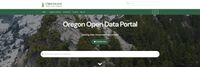
| The Oregon Data Catalog is a platform for managing and publishing data sets that are relevant to the state of Oregon in the United States. The platform is based on CKAN, which is a free and open-source software platform for managing and publishing data. | ||
|
Personal Access System for Services (PASS) | |
| Social services are programs or services designed to support individuals and communities in need. They provide assistance with basic needs such as food, housing, and clothing, as well as health and medical care, education and job training, child care, support for individuals with disabilities or mental health conditions, and aging and elder care. These services are intended to improve the quality of life for individuals and communities and help individuals achieve self-sufficiency. | ||
|
Personalized Dashboard for the Residents | |
| YoGov and the City of San Leandro partnered to create an Amazon-like dashboard for city residents, helping residents quickly and easily find services most relevant to them. The dashboard also promotes city services, events, and news that are important to the city. | ||
|
PortlandMaps - Open Data | |
| PortlandMaps delivers site-specific property information, neighborhood crime statistics, aerial photos, school information, and tons of additional map data for the City of Portland and beyond. | ||
|
Protecting user Data in the Smart City scenario | |
| Data is exchanged intensively within a Smart City, the correct usage of such information is vital to provide a better service to the citizens. Protecting user’s details is the key of a broader adoption of any application with intense data exchange and exploitation. | ||

|
RecordSponge Oregon | |
| RecordSponge is software that helps community organizations quickly analyze an individual’s criminal history to determine if they qualify to have their records expunged. | ||

|
Resilience HUB - East Multnomah | |
| Resilience Hubs are community-serving facilities augmented to support residents and coordinate resource distribution and services before, during, or after a natural hazard event. They leverage established, trusted, and community-managed facilities that are used year-round as neighborhood centers for community-building activities. Resilience Hubs can equitably enhance community resilience while reducing greenhouse gas emissions and improving local quality of life for our communities. They have the potential to reduce burden on local emergency response teams, improve access to public health initiatives, increase the effectiveness of community-centered institutions and programs. | ||
Webinars

|
Civic Platform | |
| The CIVIC Platform is made possible by the Civic Software Foundation, a non-profit organization bringing data science, modern tech, and civic willpower together to create a force for public good. | ||
|
Cryptography | |
| Making data and identity security easy to use and private is our mission. We sweat every detail to ensure the best experience possible while maintaining the highest level of security. Tozny’s solution allows us to take that security to the next level, and ensures that our client’s most sensitive data is as protected as possible. | ||
|
Eclipse Smart City | |
| The Eclipse sensiNact project consists of a software platform enabling the collection, processing and redistribution of any data relevant to improving the quality of life of urban citizens, program | ||
|
FIWARE Platform | |
| The FIWARE Community is an independent Open Community whose members are commited to materialise the FIWARE mission, that is: “to build an open sustainable ecosystem around public, royalty-free and implementation-driven software platform standards that will ease the development of new Smart Applications in multiple sectors”. The FIWARE Community is not only formed by contributors to the technology (the FIWARE platform) but also those who contribute in building the FIWARE ecosystem and making it sustainable over time. | ||

|
Go-Green Webinar | |
| GoGreen aims to help people understand the impact of small sustainable gestures on their communities through technology. It presents itself as a community rewards system where participating points providers can define actions that support their communities objectives and reward people for taking them. For the users they see a marketplace of options along with rewards based on secure blockchain based smart contracts for supportive behavior. | ||
|
Hack Oregon | |
| Hack Oregon is a rapid prototyping lab in Portland Oregon, taking a creative approach to data projects that bring insight to complex issues in the public interest. We’re a nonprofit, our teams are made of volunteers, and all the work we do is open source. | ||
|
IES-City Framework | |
| Two barriers currently exist to effective and powerful smart city solutions. First, many current smart city ICT deployments are based on custom systems that are not interoperable, portable across cities, extensible, or cost-effective. Second, a number of architectural design efforts are currently underway (e.g. ISO/IEC JTC1, IEC, IEEE, ITU and consortia) but have not yet converged, creating uncertainty among stakeholders. To reduce these barriers, NIST and its partners convened an international public working group to compare and distil from these architectural efforts and city stakeholders a consensus framework of common architectural features to enable smart city solutions that meet the needs of modern communities. | ||
|
IOTA Enabling the Smart City | |
| IOTA’s Tangle is an open, feeless and scalable distributed ledger, designed to support frictionless data and value transfer. | ||
|
Making Government Contracting Better | |
| A modern economy needs a smart, data-driven government contracting ecosystem. Our mission is to bring governments, businesses, citizens and open data together to build one. | ||

|
Mobelizing Data to Create Data Markets | |
| The boundary between the physical and the digital has disappeared. Our health, our finances, our shopping, our things - they are now fully digitized and exist in the form of data. This webinar will discuss how this data can be mobelized to create markets. The presentation will discuss 2 case studies on the markets forming around finance and health data. | ||
|
Neighborhood Data for Social Change Platform | |
| The Neighborhood Data for Social Change (NDSC) platform is a free, publicly available online resource for civic actors to learn about their communities. | ||
|
OMG and IIC Structure and activities | |
| Stephen Mellor is the Chief Technical Officer for the Industrial Internet Consortium, where he directs the standards requirements and technology & security priorities for the Industrial Internet. In that role, he coordinates the activities of the several engineering, architecture, security and testbed working groups and teams. He also co-chairs both the Definitions, Taxonomy and Reference Architecture workgroup and the Use Cases workgroup for the NIST CPS PWG (National Institute for Standards and Technology Cyberphysical System Public Working Group). | ||
|
Open urban platform | |
| The open urban platform (OUP) is a new digital urban infrastructure, comprising a set of policy agreements, national and international legislation, standards and their technical implementation, under the direction of a local or other governmental authority. This meeting is an opportunity to discuss the Aim standardization advisory group with its Chair Frans Jorna, Director digital city and innovation City of Almere. | ||
|
Oregon State Data Strategy and Data Literacy Initiative | |
| The Oregon Data Strategy provides enterprise leadership and a long-term approach for how the State will govern data as a critical asset and critical infrastructure, along with direct actions over the coming biennium (2021-2023) to set Oregon on the path for success. | ||

|
Private Data Objects | |
| As interest in Hyperledger Sawtooth grows, robust SDKs continue to be important for helping developers innovate on this blockchain platform. Since mobile is one of the most popular application platforms, it is crucial to extend Sawtooth to support native iOS and Android application development. | ||
|
Smart City Saitama | |
| We founded a consortium, called Smart City Project (SCP), inviting 27 global leading companies from each sector relevant to Smart City. At SCP, Smart City was defined based on 5 layers and 10 areas. This clarified at which segments each company’s solutions fall into. With bird’s eyes view across 5 layers / 10 areas, we examined solutions to ensure the entire optimization. | ||

|
Solid | |
| Solid is a new project led by Tim Berners-Lee, taking place at MIT. The project aims to radically change the way Web applications work today, resulting in true data ownership as well as improved privacy. | ||
|
Teaching Open Source | |
| Professors from Western New England University and Drexel University share their knowledge, resources and experience teaching open source. | ||
|
Tecnologico Monterrey | |
| Through educational experiences Tecnológico de Monterrey form people who become agents of change willing to be even more competitive in order to benefit all, with a clear focus on being instead of having, on serving others instead of possessing things; people who are responsible for their own lives, aware of the fact that their actions may promote the transformation of others. | ||
|
TriMet’s Hop Fastpass—Open Architecture in Fare Payment | |
| Hop’s open architecture allows TriMet to capitalize on changing technologies or falling costs, avoiding expensive, cumbersome negotiations with a proprietary systems integrator that is set-up to profit from changes to the fare payment system over time. | ||