Main Page: Difference between revisions
Jump to navigation
Jump to search
No edit summary |
No edit summary |
||
| Line 64: | Line 64: | ||
<div class="mainpage_box"> | <div class="mainpage_box"> | ||
<div id="mainpage-news" title=" Reports" class="items"> | <div id="mainpage-news" title=" Reports" class="items"> | ||
[[File: | [[File:Artificial Intelligence Strategic Plan Fiscal Years 2025-2027x600.webp|center|100%|link=NIST.SP.1900-207.pdf]] | ||
'''REPORTS''' | '''REPORTS''' | ||
{|style="width: 100%;" | {|style="width: 100%;" | ||
|- | |- | ||
{{#ask: | {{#ask: | ||
Revision as of 05:16, November 30, 2025
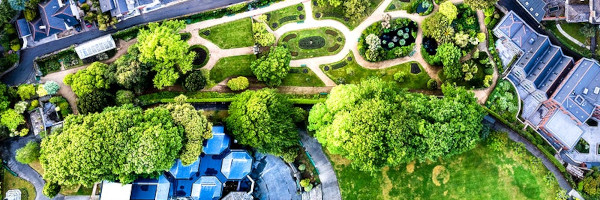
This knowledge base for municipal technology projects serves as a central repository for information, best practices, and lessons learned from previous projects. Its purpose is to improve the efficiency and effectiveness of technology implementation within a municipality by reducing the time and resources spent on repetitive tasks, promoting collaboration and knowledge sharing, and reducing the risk of project failures. |

| |
|
The Green Horizons Initiative is a multifaceted effort to foster economic vitality, environmental sustainability, and community resilience in the Urban Flood Safety & Water Quality District (UFSWQD) communities of North Portland. It encompasses projects like the Workforce Development and Vehicle Electrification Center, which aims to create jobs in emerging technologies, transition to a greener economy, and enhance community infrastructure, and the Community Engagement and Resilience Program, which focuses on empowering under-resourced neighborhoods through education, capacity-building, and strategic investments. | |
EVENTS
| ISE 2026 | 03-Feb-26 |
| IT-TRANS 2026 | 03-Mar-26 |
| Smart Cities Connect Conference & Expo 2026 | 10-Mar-26 |
| Intertraffic Amsterdam 2026 | 10-Mar-26 |
| Smart City Summit & Expo 2026 | 17-Mar-26 |
Premium Sponsors
 |
 |
 |
 |
 |
Sponsors
 |
 |
 |
 |
 |
 |
 |
 |
 |
 |
 |
 |
 |
 |
 |
 |
 |
 |
 |
 |