This supercluster was formed and is managed by forward looking municipalities interested in preparing their infrastructure for new technologies that look set to provide better, more equitable services at lower cost. It explores the opportunities provided by first and last mile vehicles including shared, low speed and autonomous. It explores the opportunities for building vibrant communities around transfer points and mobility hubs and it addresses how these vehicles and hubs can play a role in the last mile delivery of packages and other freight. To support these opportunities the supercluster works with teams developing new and advanced transportation models and environmental sensors that allow both the prediction of probable outcomes and the measurement of actual outcomes of introducing these technologies. Finally, the supercluster works with teams implementing a smart citySDK to ensure the portability and interchangeability of solutions and propose regulatory and policy changes that support the safe deployment of these technologies.
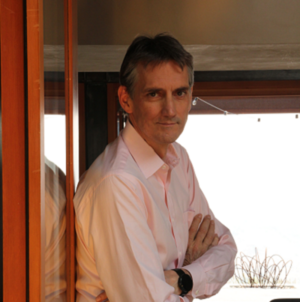
<li style="display: inline-block;"> [[File:skip_newberry.jpg|thumb|none|300px|Skip Newberry, President and CEO, <br /> Technology Associates of Oregon]] </li>
[https://www.portlandoregon.gov/ City of Portland OR], [https://www.columbus.gov/ City of Columbus OH], [http://www.techoregon.org/ Technology Association of Oregon], [http://urban.systems/ Urban.Systems Inc.], Baltimore Electric Vehicle Initiative, [https://isoftstoneinc.com/ IsoftStone North America], [https://www.pnnl.gov/ Pacific Northwest National Laboratory], [https://www.pdx.edu/ Portland State University], [https://www.osu.edu/ Ohio State University], [http://www.ubiwhere.com/en/ Ubiwhere]
|+Past and Current Reviews
}}
! scope="col" | Date
! scope="col" | Topic
! scope="col" | Speaker
! scope="col" | Play
|-
|Oct 30, 2018
||[[media:EWF Presentation for Transportation Supercluster Monthly Review_30 Oct 2018.pdf|Energy Web Foundation]], [https://energyweb.org/2018/04/20/engie-microsoft-sp-group-dbs-bank-twl-e-on-and-sonnen-test-the-first-version-of-ew-origin-blockchain-app/ Website]
|Doug Miller, Senior Associate at Rocky Mountain Institute
|[[media:2018 ATTRI GCTC.pdf|Accessible Transportation Technologies Research Initiative Presentation]] and [https://www.its.dot.gov/research_areas/attri/index.htm Web Page]
|Mohammed Yousuf, Fairbank Highway Research Center
|[[media:FIWARE-based Public Transportation use case from Tecnologico Monterrey_121217.pdf|FIWARE-based Public Transportation use case from Tecnologico Monterrey]]
These project teams represent work in a number of geographical locations. In an effort to understand buth the similarity and the variety of these locations we have started a list and made some initial efforts to clasify them into groups that exhibit common elements. By doing this we hope that as these projects can learn from one another and accelerate the development of a wide range of smart city solutions. List of [[Projects and their Geographical Locations]]. -->
|[[GCTC-Smart and Secure Cities and Communities Challenge (SC3) Expo.]]
|Walter E Washington Convention Center
|-
|Nov 1-2, 2018
|[[GCTC-SC3 NASA to host Urban Air Mobility Grand Challenge Industry Day]]
|San Jose, California
|-
|Oct 29-30, 2018
|[https://www.nist.gov/news-events/events/2018/10/gctc-smart-and-secure-cities-and-communities-challenge-public-safety Public Safety SuperCluster (PSSC) Conference and Cybersecurity and Privacy Meeting Part 2]
|NIST, Gaithersburg, Maryland
|-
|Oct 3, 2018
|[[GCTC-SC3 Cybersecurity and Privacy Advisory Committee Meeting Part 1]]
|San Jose, California
|-
|Sept 20, 2018
|[https://westbigdatahub.org/featured-events/all-hands-2018/ West Big Data Hub 2018 Open Annual All Hands Meeting]
|Boise, Idaho
<!-- |-
|Sept 6-7, 2018
|[[Ag & Rural SuperCluster (ARSC) to Host a Workshop]]
This supercluster was formed and is managed by forward looking municipalities interested in preparing their infrastructure for new technologies that look set to provide better, more equitable services at lower cost. It explores the opportunities provided by first and last mile vehicles including shared, low speed and autonomous. It explores the opportunities for building vibrant communities around transfer points and mobility hubs and it addresses how these vehicles and hubs can play a role in the last mile delivery of packages and other freight. To support these opportunities the supercluster works with teams developing new and advanced transportation models and environmental sensors that allow both the prediction of probable outcomes and the measurement of actual outcomes of introducing these technologies. Finally, the supercluster works with teams implementing a smart citySDK to ensure the portability and interchangeability of solutions and propose regulatory and policy changes that support the safe deployment of these technologies.
Chair(s)
Wilfred Pinfold, CEO, Urban Systems
Skip Newberry, President and CEO, Technology Associates of Oregon